
| Inca Trail > Get Fit to Hike Inca Trail | |
Inca Trail Fitness |
|
You’ve spent endless nights researching on the Inca Trail, its location, duration and appropriate precautions to take. You’re really looking forward to what could be the trip of a lifetime. However, as part of your preparation, you also recognise the importance of getting in shape for the Inca Trail, which is where realbuzz comes in. The demands of a trekking holiday are specific and very different from other activities so it is important that your training programme is also specific to the demands of your trek. The majority of people taking part in this trekking adventure are not trekkers. It is therefore imperative that everyone follows a reasonably serious course of training in order to get the maximum benefit. Although you may feel that you are fit enough, remember the Inca Trail will include things which are not in your day’s normal routine. |
|
Whilst these events are not meant for specialist trekkers they are nevertheless a challenge and require a reasonable standard of fitness and understanding of how to climb hills and walk along narrow paths at different altitudes. |
|
You will be trekking for long periods averaging 6 - 7 hours a day, often, in different temperatures and over hilly and rigged terrain at times. This will require endurance, leg strength, aerobic fitness, stamina and a good comfortable pair of walking boots! |
|
General Guidelines on your preparation for the Inca Trail |
|
1. Use the hiking boots you will be using for the Machu Picchu trek. 2. Look for trails / paths through woodlands or countryside in order to get used to trekking over stones and uneven ground. Also carry a rucksack weighing approx. 5-7 kgs (11-13 lb) in which you should have a water bottle, some food, toilet paper and other personal effects. You may also want to train with a walking stick. 3. It is essential to find terrain which is hilly and has narrow paths climbing unevenly through the countryside. This will help overcome height concerns you may have. 4. It is vital to do at least one weekend trek of 7 hours each day across the most difficult terrain you can find within your area. This does not mean climbing Mt. McKinley or Mt. Hood. The objective is to find a rural rocky / hilly / stony terrain so that your muscles can get used to long periods of walking. 5. For people who are overweight it is important to also use the gym (particularly the step machine) and do regular swimming during this period in order to reduce the waistline. This will make it much easier to walk for 4 consecutive days. |
|
If not in shape, your Machu Picchu hike preparation should include: |
|
• Aerobic Training – can include running, cycling, swimming, cross-country running, speed walking etc., for a minimum of 3 minutes per session • Strength Training – should include exercises working mostly on upper body strength. Include exercises for arms, shoulders, back and abdominals. Each exercise should include 3 sets of 10-15 repetitions (reps). You do not have to join a health club to get a good strength work out – you can do sit ups and press ups at home. • Stress Training – This work out should be around 30 minutes and you want to get your heart rate up to around 130-180 beats per minute for at least 1 minute duration at a time, but no longer than 2 minutes. • Recreational Exercise – is any form of fun exercise that you enjoy. Can include climbing, trekking, dancing, canoeing etc. |
|
Leg strength for the Inca Trail |
|
| The key muscles of your body to train are the ones on your legs. We have included a series of exercises to gain leg strength. | |
 |
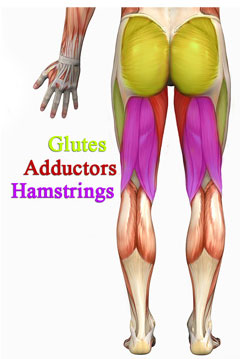 |
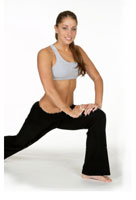
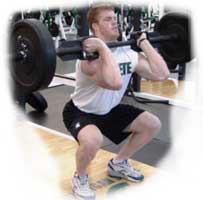
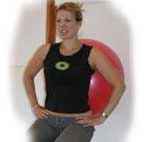
These Leg Exercises are Most Effective because they are Multi-Joint Functional Movements The best leg exercises work a large percentage of your lower body muscle mass. The more muscle mass each leg exercise recruits, the more they will positively effect your body. Lunges Lunges are by far the most effective leg exercises. They dynamically exercise your quadriceps, hamstrings, glutes, as well as your adductors, abductors and calves. Start: Stand with your shoulders in neutral posture and draw in your core. Begin the motion: Step forward, gliding your foot along the ground until your heel touches a few feet in front of you. As your front toe lands you should bend your front and rear legs until your rear knee is about 1 inch above the floor. Your front heel should be directly below your knee. Both legs should bent at around the same angle which is around 90 degrees. From the bottom position you have many options. For the basic lunge you should lift your body up at the same time you bring your hips forward until you are in the original standing position. Never lunge forward and land on your toes. Never let your front knee wobble side to side and try to avoid all lateral motion. Always keep your upper body upright, do not lean forward. Dead Lifts Dead lifts may not only be one of the best exercises, they could be the best of all exercises. Dead lifts are a full body exercise which depends on proper form to get the full benefits. If you perform dead lifts with improper form you risk injuries to your back and knees. Start: Take a slightly wider than shoulder width stance. Grip the barbell with either an overhand or It is crucially important for the entire motion to keep your back flat, never let your shoulders fall forward. Do not bend your arms the entire motion. It is very important to stabilize your core and support your lower back to take a deep breath and hold it until the weight is pulled all the way up. Begin the motion: Keep your core tightly drawn in for the duration of the dead lift. Drive up with your chest. Pull the weight straight up. Make sure to keep it as close to your body as you can. At the top of the motion you must contract your glutes (squeeze your butt) and retract your shoulders. Lower the weight all way back to the floor. Remember, the dead lift is the act of lifting the weight off the floor. Every repetition make sure to lower the weight all the way to the floor. It is an exercise which is best used for low reps. If you perform high reps on the dead lift, there is a good chance your form will break down and you will get injured. The dead lift is one of the best leg exercises as it is a whole body task to lift the weight up, but is also a great exercise for your glutes, especially if the bar is low to start. Squats are possibly the most fundamental exercise. They are one of the best leg exercises because they work a good percentage of your muscle mass. Proper back squats will help you get stronger, gain muscle, burn fat and tone your entire body more than any other exercise. Start: Stand with a barbell on your upper shoulders. There are 2 common positions to put the barbell. The high position is right on top of your trapezious muscles. The low position is almost in the middle of your trapezious muscle. The low position is common among power lifters and people lifting very heavy weights. It is recommended you start in the high position. Begin the motion: Unpack the barbell and clear the racks. The first movement in the back squat is the anterior pelvic rotation. Before you bend your knees, you must rotate your hips forward. This causes your butt to travel backwards. Lower your butt down as if you are sitting on an imaginary chair. Squat down as far as you can comfortably. It is preferable if you squat down until your hips and knees are parallel but not necessary. After you reach bottom, lead upwards with your chest. This means you never should let your shoulders move forward. Contract your glutes as you reach the standing position. Always keep the core very tightly draw in during the entire motion of weighted back squats. If performed correctly weighted back squats are the choice of many for the best leg exercise. The good thing about squats is you can get a good leg workout with just your body weight. There are many variations of squats. You can perform a squat without any weights, or use dumbbells. You can either hold the dumbbells in a high hang position in front of your shoulders or a low hang at your sides. Front squats are the same as back squats except the bar is placed across the anterior deltoids (front of shoulders.) This requires very strong shoulders if you use a decently heavy weight. If you are able to hold the bar properly front squats are one of the best leg exercises. Front squats were originally performed as part of the Olympic lift, the clean and jerk. When you perform front squats you can either hold the bar in high hang position or have your arms either crossed in front of you. An advantage of front squats is you can usually squat with more range of motion than a back squat. The major disadvantage is the difficulty of holding the bar as it is hard on the anterior deltoids and wrists. The physio ball squat is a perfect leg exercise for beginners. It can help teach the proper hip movement for back squats while the legs are in the optimal 90 degree relationship. This will eliminate almost all stress on the lower back. Start: Place a stability ball against a wall. Lean back into the ball with it positioned in the middle of your back. Position your feet around shoulder distance apart. You should have your feet about a foot in front of your hips. Hold the dumbbells in a high hang position at your shoulders or a low hang position at your sides. Begin the motion: Draw in your core. Rotate your pelvis anteriorly (stick your butt out) and slowly drop your hips straight down towards the floor. Do not let your hips move forward. Stop when your hips, knees, and ankles are aligned in a 90 degree angle. Pause for a second and squat back up to the original position. |
|
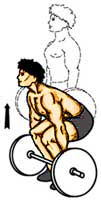 alternating grip. When you set up for the dead lift, you can lean back until your butt is pretty low.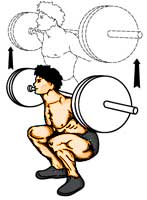
IATA #91500802| ASTA #900181553 | CST # 2085372-40